Courtesy the artist; Photo: Ben Tran
Courtesy the artist
Edited by Nate Lavey, music by The Daxophone Consort; courtesy the artist
Courtesy the artist; Photo: Maria Baranova
Courtesy the artist
Courtesy the artist
Courtesy the artist; Photo: Ben Tran
Courtesy the artist
Daxophone Starships
Material: Assorted hardwoods
Dimension: Dimensions variable
Courtesy the artist; Photo: Ben Tran
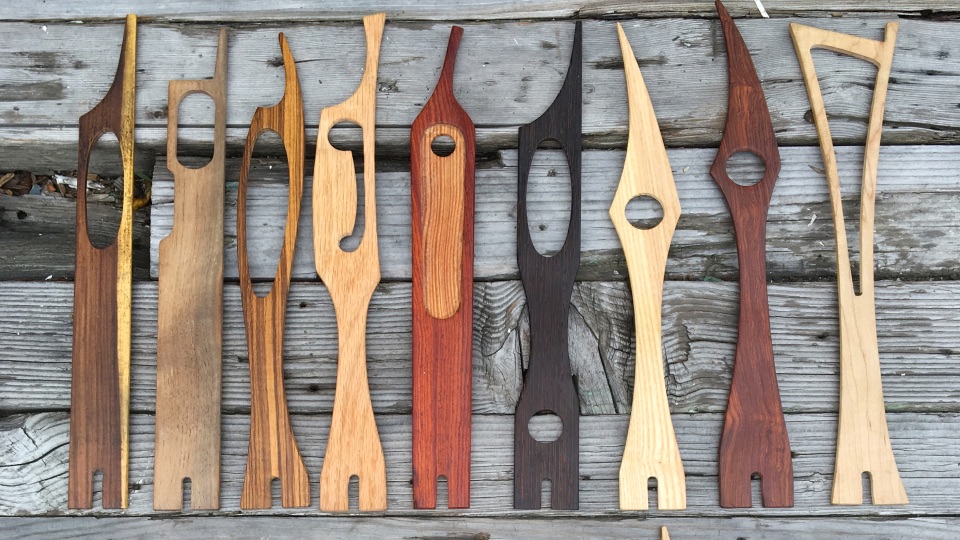
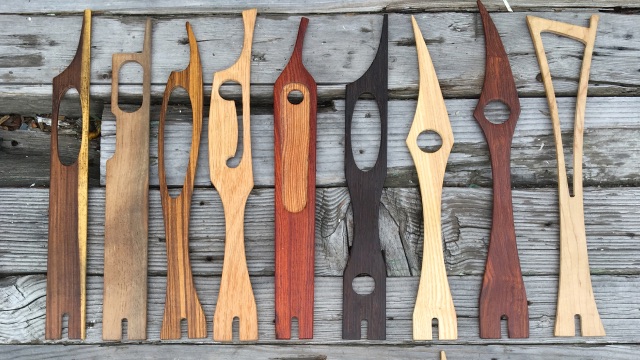
Daxophone Tongues (personal quiver)
Material: rosewood, claro walnut, zebrawood, red oak, cocobolo and yellow pine, wenge, ash, Brazilian rosewood, and red maple
Dimension: Dimensions variable
Each tongue used to play a daxophone is visually and auditorily unique. The type of wood and the shape of the tongue produce distinctive sounds.
Courtesy the artist
In the Daxophone Workshop
Runtime: 03:00
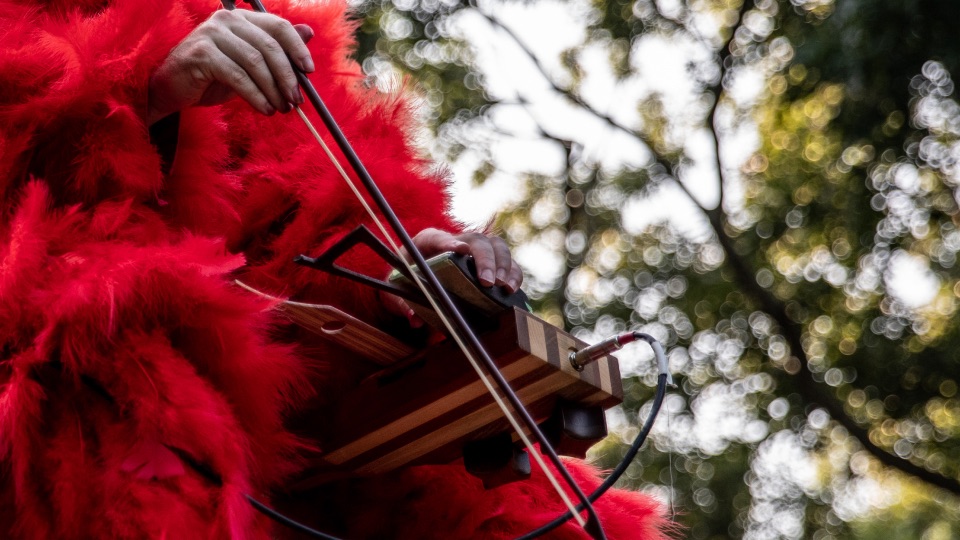
Fishkin crafts musical instruments by hand, including the rare daxophone, which was invented in the 1980s by musician Hans Reichel. An electric wooden instrument, the daxophone remains relatively obscure and has never been mass produced. Fishkin makes daxophones for himself and others.
Edited by Nate Lavey, music by The Daxophone Consort; courtesy the artist
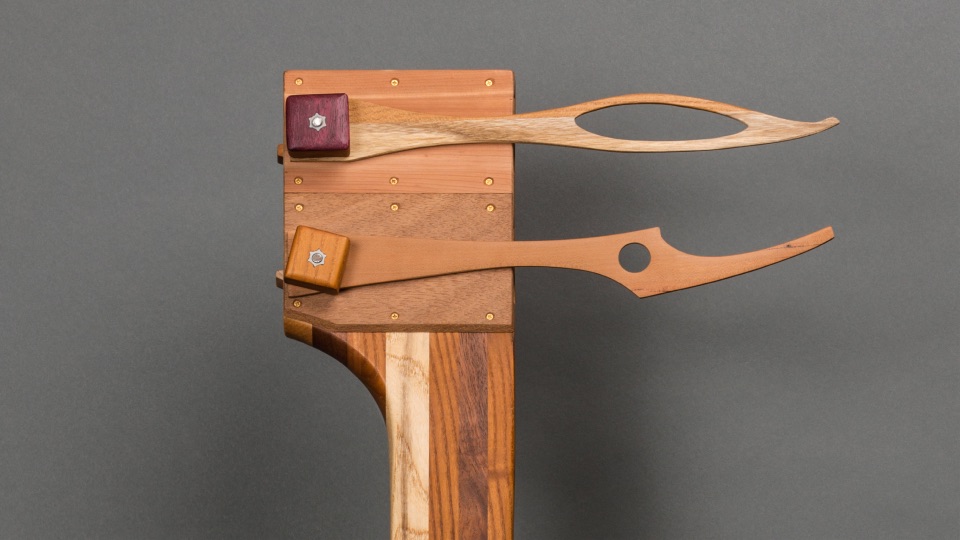
Daxophone Close-up
Material: Assorted hardwoods
Courtesy the artist; Photo: Maria Baranova
The Lock-Keeper's Cabin (entrance)
Composers: Daniel Fishkin, Cleek Schrey, and Ron Shalom
The artist and a small community of musicians are keeping the instrument alive through regular performances and recordings.
Courtesy the artists
Composing the Tinnitus Suites: 2020
Runtime: 03:52
Courtesy the artist
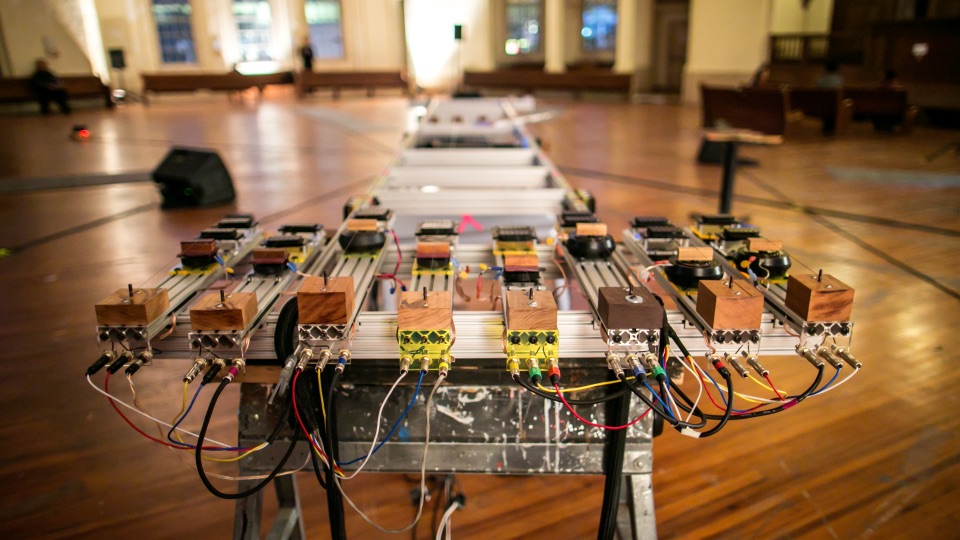
The Lady's Harp (no.4)
Material: Extruded aluminum, piano wire, transducers, coils, wood, 12 channel amplifier, and mixer
Dimension: Dimensions variable
Courtesy the artist; Photo: Ben Tran
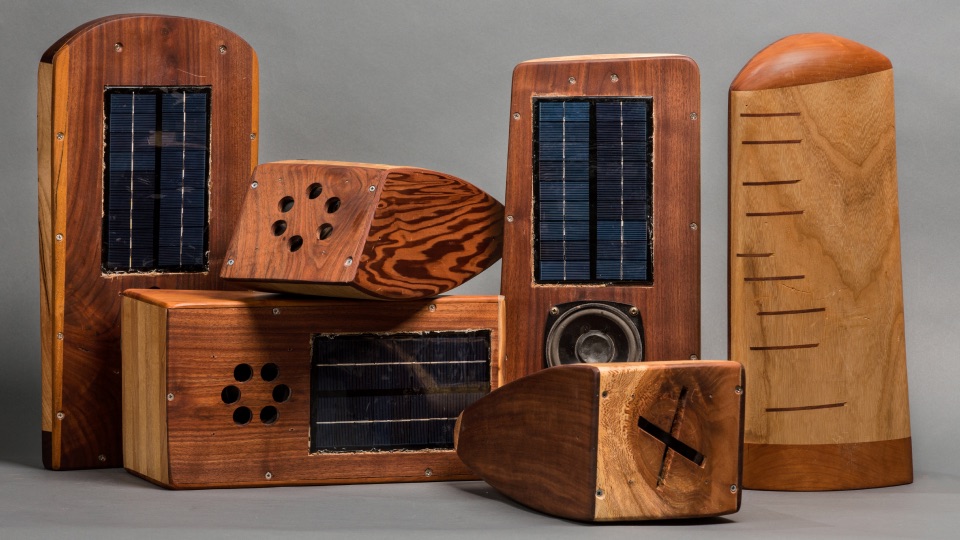
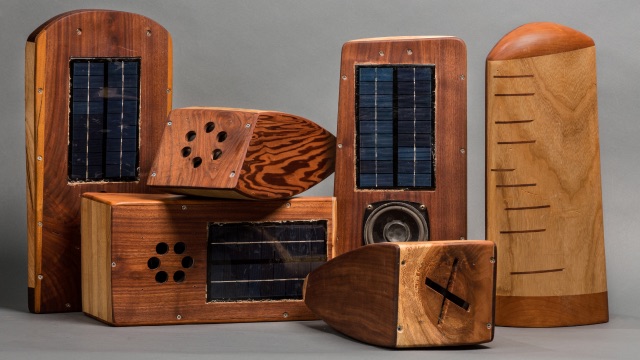
Solar Sounders
Material: Assorted hardwoods, custom circuit boards, solar panels, and loudspeaker
Dimension: Dimensions variable
Courtesy the artist
Daniel Fishkin's instruments
Runtime: 18:54
Courtesy the artist