is a transdisciplinary artist exploring ornamentation, functionality, and transgender and Jewish histories. Her sculptures, ritual objects, and 2D work challenge binaries—utilitarian versus aesthetic, sloppy versus refined, sacred versus profane—to investigate transness in the broadest sense. Originally from New England, she is based in the San Francisco Bay Area.
Courtesy the artist
Courtesy the artist
Courtesy the artist
Courtesy the artist
Courtesy the artist
Courtesy the artist
Courtesy Jordan Reznick
Courtesy the artist
Courtesy the Museum of Arts and Design
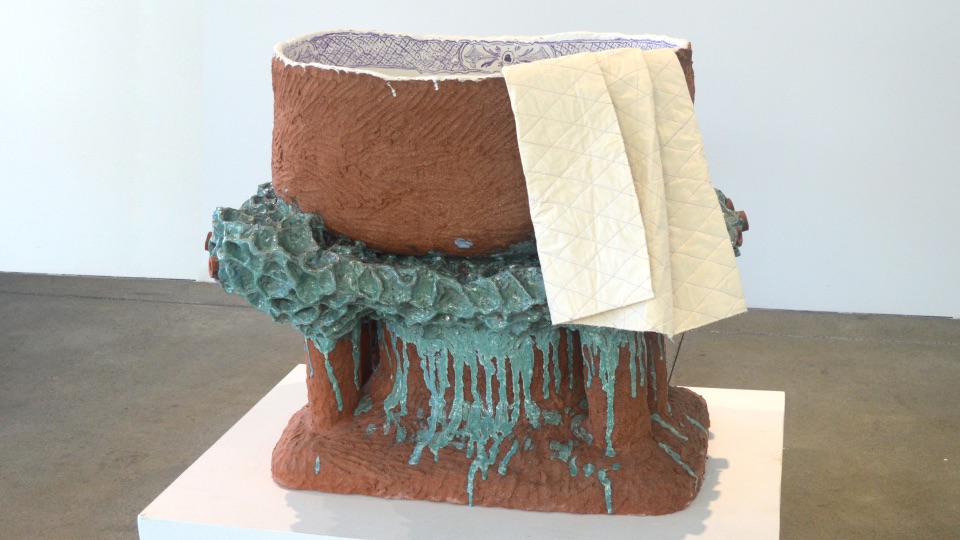
Porous Sea (tub)
Material: Glazed earthenware
Dimension: 48 x 36 x 30 in (121.9 x 91.4 x 76.2 cm)
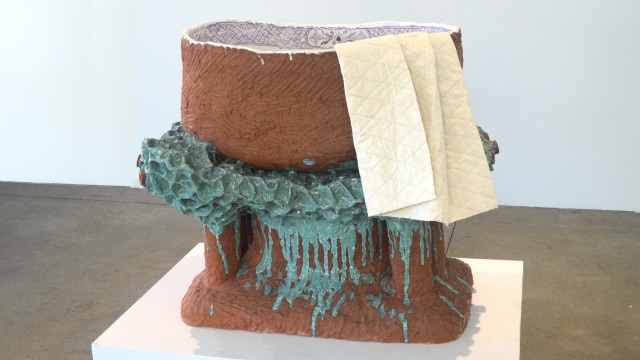
In Porous Sea (tub), Green references the mikveh, a ritual bath used in Judaism. Immersion in the mikveh traditionally takes place after a woman menstruates or before or during major life events, such as conversion, marriage ceremonies, and the Jewish High Holidays. The base of Green’s tub has spouts, referencing ornate tulipiere forms. The interior of the tub is glazed, its texture and images suggesting the movement of shimmering water. Densely patterned and decorated with images of fungi, two mirrored figures are illustrated submerged in water, their hands forming the sign for priestly blessing, a practice used to bless the congregation. Green’s reworking of this ritual object in clay, a malleable material with transformative qualities, challenges gender binaries of religious traditions. The tub is a space for spiritual sanctity and an object for ritual washing that affirms the queer body.
Courtesy the artist
Hybrid Vessel
Material: Glazed earthenware
Dimension: 27 x 24 x 30 in (68.5 x 61 x 76.2 cm)
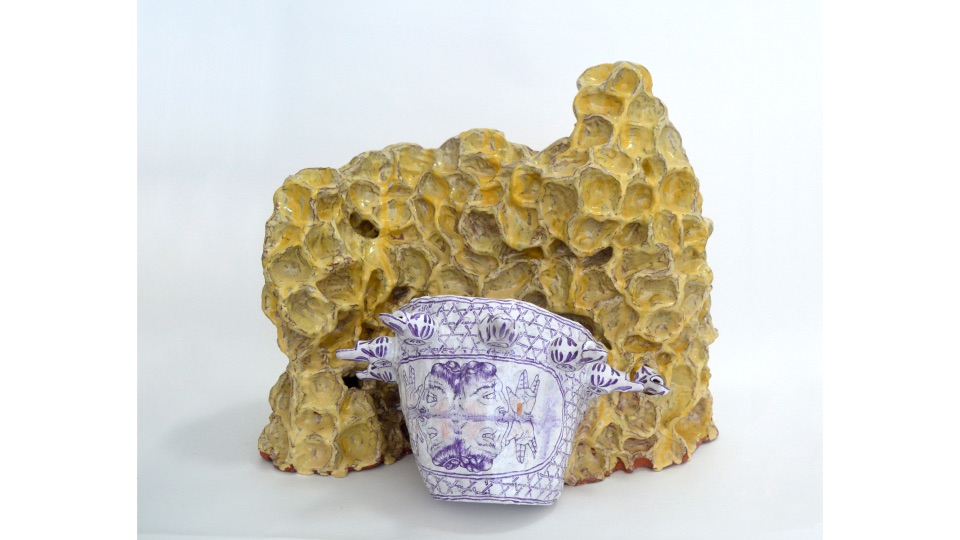
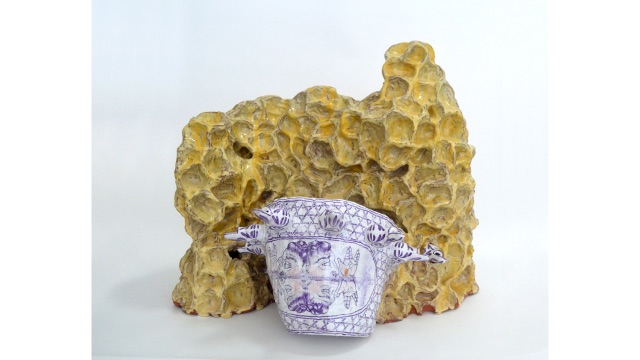
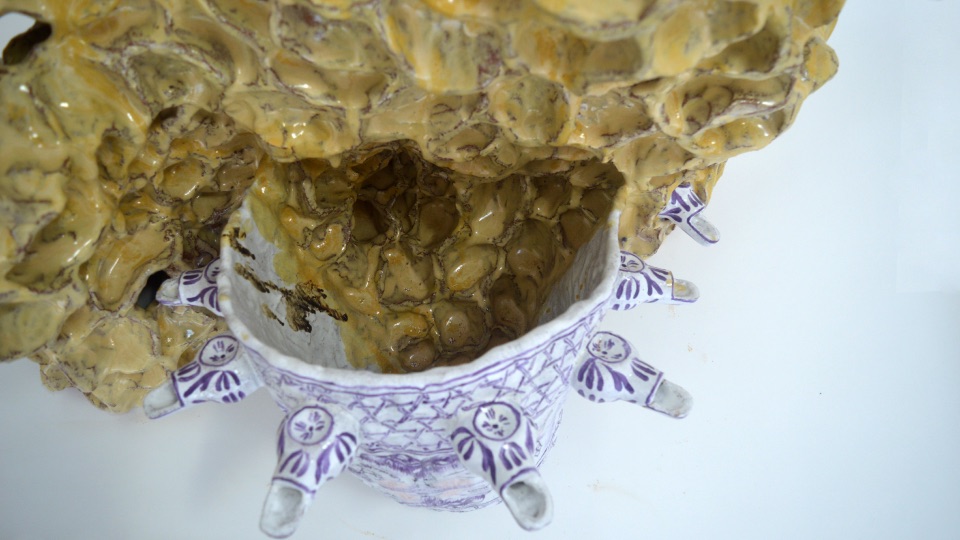
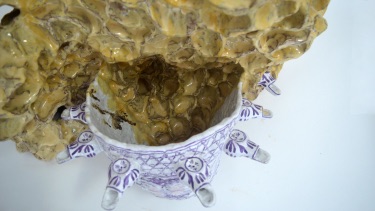
Hybrid Vessel combines Green’s investigation of mycology, the study of mushrooms, with her interest in the history of ceramic vessels. The form in this work recalls a tulipiere, a ceramic ornamental display for flowers dating to the seventeenth century. Each spout is intended to hold a single stem, with the base containing water. Adorned with patterns and the signs of priestly blessing, the object is consumed by a dimensional morel form, as fungi enter and change the shape of the object.
Courtesy the artist
Hybrid Vessel (detail)
Material: Glazed earthenware
Dimension: 27 x 24 x 30 in (68.5 x 61 x 76.2 cm)
Green’s study of mycology also connects to a Nazi-era children’s book, The Poisonous Mushroom. This antisemitic story was intended to teach children about the visible characteristics of a Jewish person. Green connects the othering of European Jewish bodies in the book’s central analogy to the othering of transness and queerness and the coded ways in which marginalized religious and gender identities are mediated, connected, and made visible or invisible.
Courtesy the artist
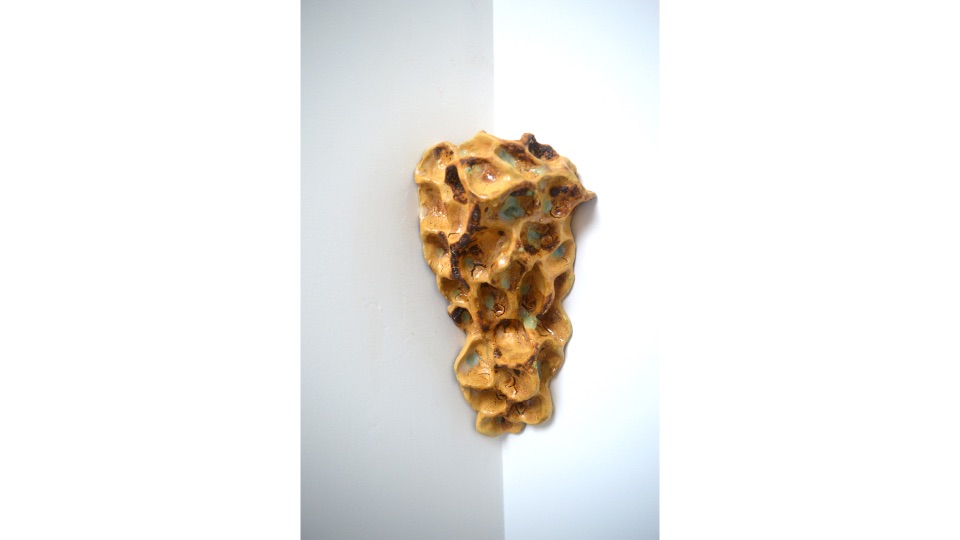
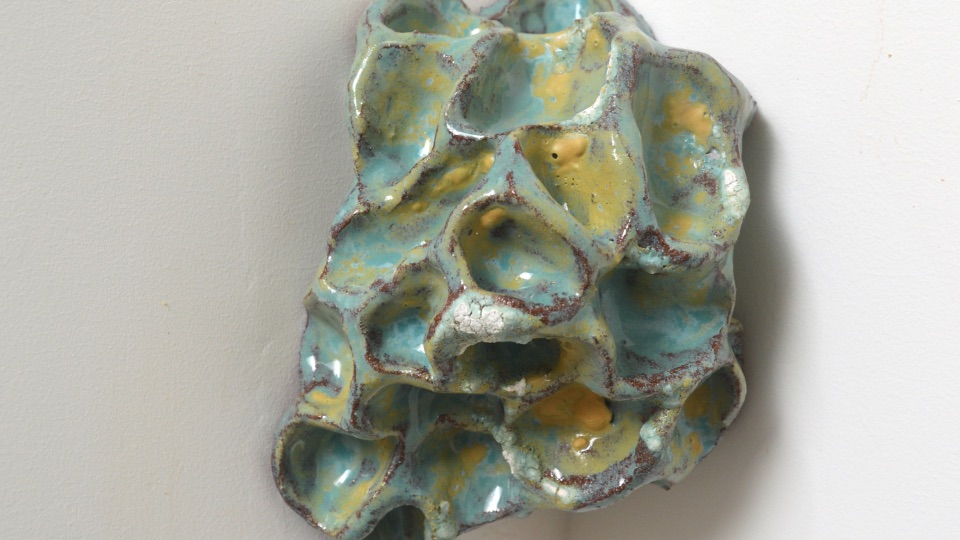
In the Midst of the Sea 2
Material: Glazed earthenware
Dimension: 5 x 4 x 3 in (12.7 x 10.1 x 7.6 cm)
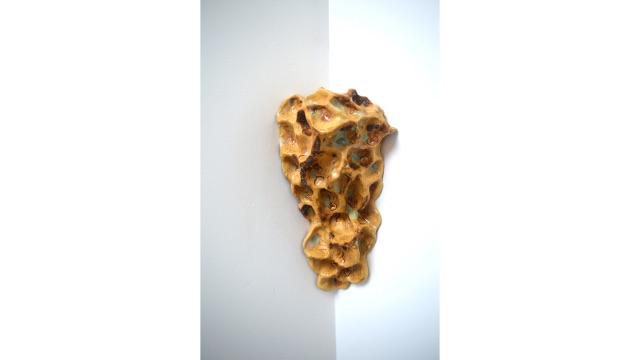
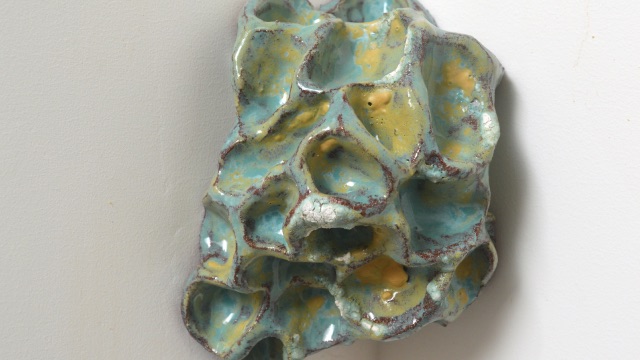
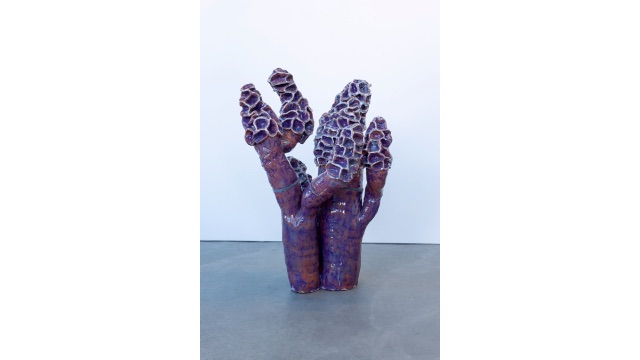
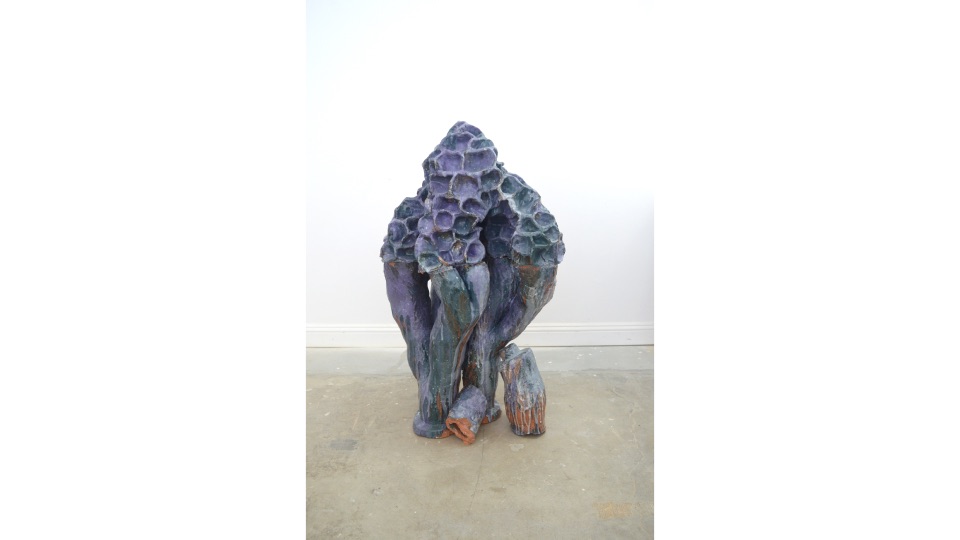
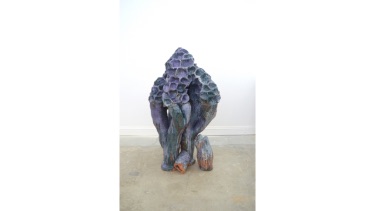
In her work Green often uses the forms of mushrooms and fungi, in particular oversized morels, an edible fungus. Intended to interact with the architecture of a space, Green views these porous fungus forms as outgrowths or transfers from her larger works, just as spores, capable of sexual and asexual reproduction, carry and spread. The honeycomb surface of the morel is highlighted by the artist’s experimental glaze techniques.
Courtesy the artist
In the Midst of the Sea 3
Material: Glazed earthenware
Dimension: 8 x 5 x 3 in (20.3 x 12.7 x 7.6 cm)
Courtesy the artist
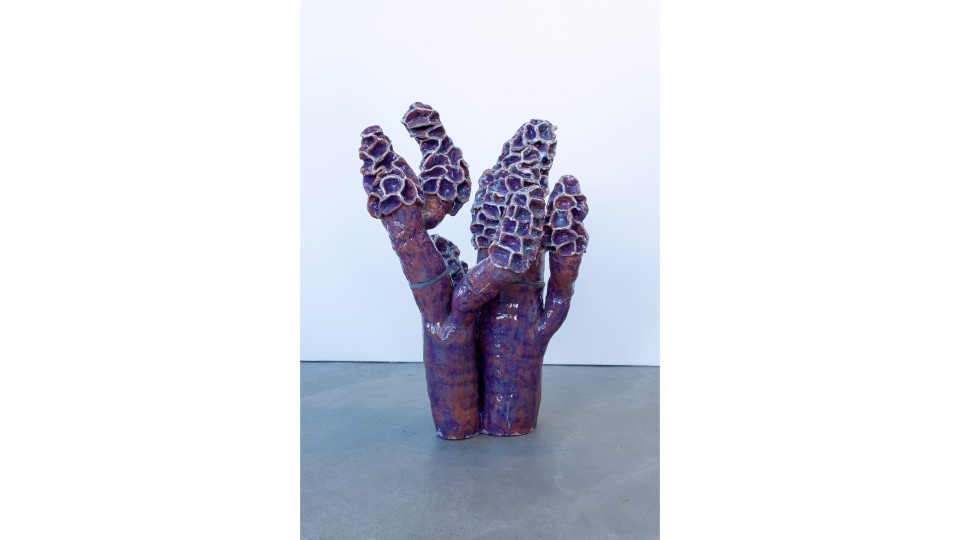
Morel Figure
Material: Glazed earthenware
Dimension: 41 x 30 x 21 in (104.1 x 76.2 x 53.4 cm)
Courtesy Jordan Reznick
Morel Figure with Prosthesis
Material: Glazed earthenware
Dimension: 37 x 22 x 21 in (93.9 x 55.8 x 53.3 cm)
Courtesy the artist
Porous Sea (tub)
Material: Glazed earthenware
Dimension: 48 x 36 x 30 in (121.9 x 91.4 x 76.2 cm)
In Porous Sea (tub), Green references the mikveh, a ritual bath used in Judaism. Immersion in the mikveh traditionally takes place after a woman menstruates or before or during major life events, such as conversion, marriage ceremonies, and the Jewish High Holidays. Green’s reworking of this ritual object in clay, a malleable material with transformative qualities, challenges gender binaries of religious traditions. The tub is a space for spiritual sanctity and an object for ritual washing that affirms the queer body.
Support for Android AR is coming soon.
SEE THE WORK
IN FRONT OF YOU.
Use the QR code to launch our AR experience on your phone or tablet.
Courtesy the Museum of Arts and Design